
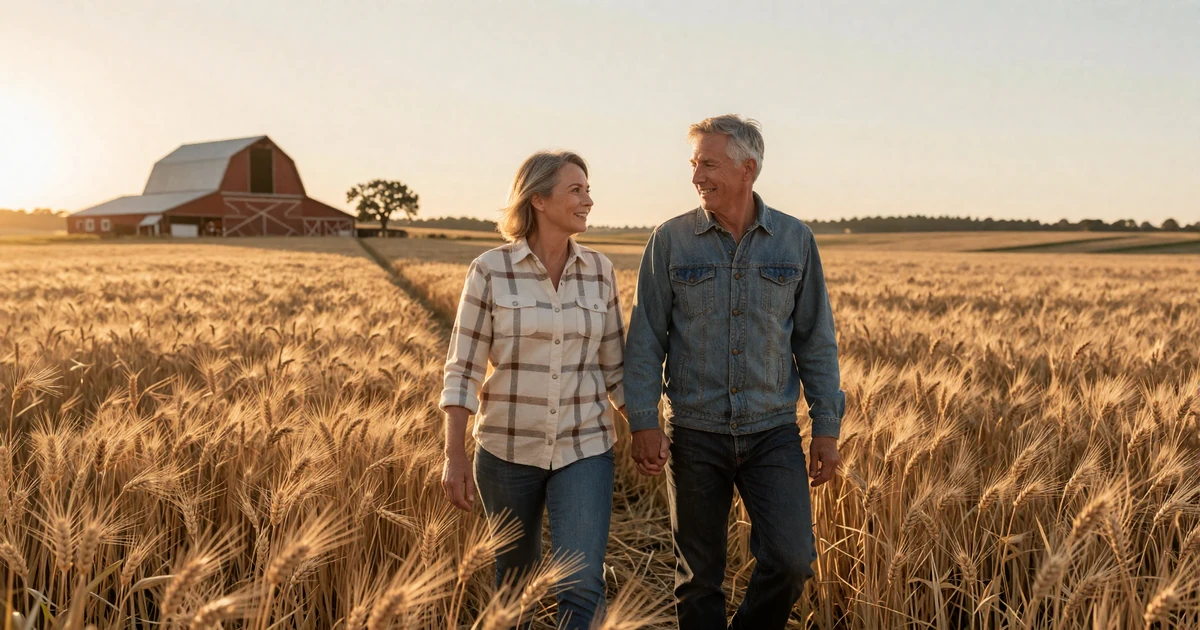
What a Farm Marriage Actually Looks Like
A farm marriage is a partnership between two people and a place. The work is shared, the seasons set the pace, and the relationship grows in the spaces between chores. Country couples who thrive tend to share four traits:
- They split the load honestly - livestock, equipment, books, and house - instead of drawing hard lines.
- They talk during chores - not just at dinner. Fence-walking is the farmer's couples counseling.
- They respect the calendar - calving and harvest get protected space; January and July belong to them.
- They raise their kids in the work - chores, 4-H, and real responsibility, not screens and scheduled play.
The Daily Rhythm: Dawn Chores to Porch Evenings
Life on a working farm runs on a clock older than any app. The cows don't care what time the coffee shop opens. Chickens want feed at first light whether you slept well or not. A farm couple's day is built around those non-negotiable moments - and strong relationships form in the transitions between them.
Here's the thing most outsiders miss: the best conversations in a farm marriage happen during the work, not after it. A husband and wife walking the pasture at 6 a.m. to check a new calf will cover more ground in twenty minutes - emotionally and practically - than most couples do in a week of scheduled "date nights." The work is the intimacy.
Dawn: The Shared Start
Coffee on the porch at 5:30, boots on by 6, split chores before breakfast. Couples who start the day side by side - one on feed, one on milking - set a rhythm nothing else in the day can break.
Midday: The Handoff
Lunch is the mid-shift briefing. Who needs help after, what the weather is doing, which field gets cut first. Short, practical, honest - the opposite of a workplace meeting.
Evening Chores: Winding Down Together
Second round of feed and water, lock the hens, walk the fence. This is when real farm couples do their best talking. No phones, just boots on gravel.
Porch Evenings: The Reward
Supper at 7, porch by 8 when the light goes honey-gold, stars you can actually see by 9. Bed by 9:30 so you can do it all again tomorrow. That's the shape of a farm marriage.
A working farmer we interviewed put it like this: "We don't have 'quality time.' We just have time. All of it together. That's the point." It's a quiet luxury city couples spend a lot of money trying to recreate.
Sharing the Load: Chores, Animals, and Everything In Between
A farm is too much work for one person. Every lasting country couple figures out some version of the same truth: you divide the jobs by strength, skill, and season - not by old-fashioned rules about what a husband or wife is "supposed" to do. The women we talk to run combines. The men we talk to know their way around a canning jar. The load gets shared because it has to.
What works: Most thriving farm couples sit down every January and do a "farm meeting" - what went right, what went wrong, who wants to swap a task this year, what new skill each of them wants to learn. It sounds unromantic. It's one of the most romantic things two partners can do.
Here's how the labor tends to get split on a mid-sized family operation. Every farm is different - but the pattern holds:
| Category | Typical Split | Why It Matters |
|---|---|---|
| Livestock & calving | Shared, trade-offs by season | Both partners need to handle emergencies alone |
| Equipment & field work | Often one lead, one backup | One-person bottlenecks kill operations |
| Books & taxes | One partner owns it, both review | Financial transparency keeps trust |
| Garden & canning | Shared, kid-inclusive | Year-round food, family tradition |
| House & cooking | Whoever finishes chores first | Avoids the "second shift" resentment |
Seasons of a Farm Marriage: Calving, Planting, Harvest, Rest
Country couples live on a four-season emotional calendar most people have never felt. Each season carries its own rhythm, stress, and gift - and a healthy farm marriage learns to match the pace rather than fight it.
🌱 Spring - Calving & Planting
The hardest season on a marriage. Up at 2 a.m. checking the cows, in the tractor by six, planting windows that won't wait. Patience and short tempers both run out. The couples who survive spring protect one small ritual - one coffee together, one short walk - and let the rest slide.
☀ Summer - Hay, Heat, and Kids Home
Long days, county fairs, visiting grandkids underfoot. Summer is when farm life feels the most like a lifestyle and the least like a job. It's also when most long-distance farmer dating couples finally meet in person - county-fair weekends are prime courtship territory.
🌽 Fall - Harvest
Fourteen-hour days for four to eight weeks straight. Dinner in a cooler, dessert in the cab. A farm wife once told us, "We don't fight in October. We don't have the time or the breath." Harvest is survived, not savored - and the love afterwards is deeper for it.
❄ Winter - Rest & Courting Season
The quietest months are the sweetest. Slower mornings, woodstove suppers, real conversations. This is when farm couples reconnect, take the trip, host the family, and plan the year. If you want to fall for a farmer, meet one in winter.
Distance adds another layer to the seasonal test - but it doesn't have to break things. David and Emily, a well-known FarmersOnly success story, kept their relationship going through a military deployment by writing letters during David's tours and planning every leave around Emily's farm calendar. They're proof that rural online dating works across both distance and seasons - if both people respect the rhythm.
A farm marriage isn't measured by anniversaries. It's measured by seasons you got through together. - The Farmhouse Journal
Raising a Family Where the Work Is the Life
Kids on a farm grow up inside the work. A five-year-old has a bucket calf to feed before school. A twelve-year-old can drive a four-wheeler to check a water tank. By the time they're in high school, they've run a 4-H project from birth to auction and know what a bank statement looks like. It isn't childhood lost - it's childhood rooted.
The bottom line: raising a family on the land is its own form of love language between two partners. The kids see both parents working. They see arguments resolved before breakfast because there's no time to sulk. They see grandparents pitching in during calving. What they learn about marriage, they learn by watching one function under pressure - and that lesson sticks.
What farm kids absorb without being told: Work is how you show love. Weather humbles everyone. A handshake still means something. If you break it, you fix it. And the family table at suppertime is worth protecting with your life.
Plenty of the couples on this site are raising - or helped raise - kids exactly that way. It's a big reason the Christian farmer dating community and the country-at-heart singles community overlap so much. Faith, family, land. Same thread, different colors.
Real Farm Couples, Real Stories
We could write another thousand words about farm life in the abstract, but nothing beats hearing from the people actually living it. Two stories from our community:
We split the herd the first year we got married - his cattle, my cattle. Sounded crazy to our neighbors. Fifteen years later it's still the smartest thing we ever did. We each know every animal by name and nobody feels like the hired hand.
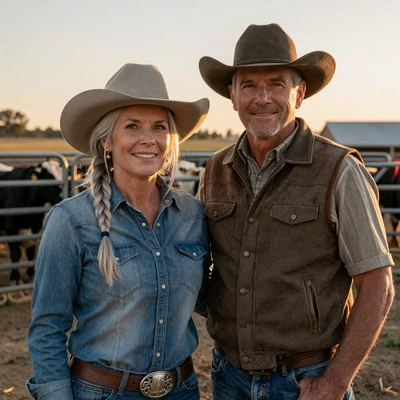
David was deployed three times and we wrote real letters the whole way through. The farm calendar and the Army calendar don't match - you plan around both or you don't make it. We did. Twelve years married now, three kids, one very patient herd of Holsteins.
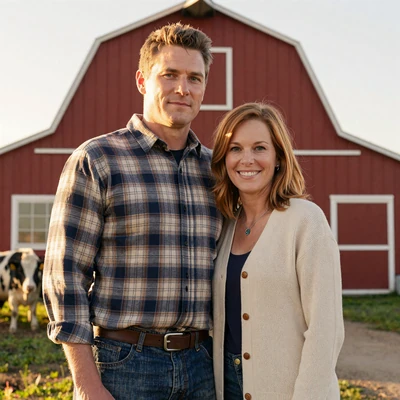
More stories like these on our success stories page - including several that started exactly where you are right now, reading about farm life on a screen and wondering whether it's real.
Explore More
If the rhythm of farm life resonates with you, these next steps are where the community lives:
Christian Farmers Dating
Faith, family, and farm - meet country singles who share the values the land already teaches.
Country-at-Heart Singles
Not a farmer, but country to the bone? This community is built for you - rural life, no land required.
Meet Real Farmers
Start on the homepage - browse today's active farmers and pick a state close to home.